Thursday, 18 August 2022

1969 Coach Retirements

1969 Coach Retirements


With the new retirements, I wanted to give a proper send-off to those coaches who have been some of the best in the league’s first two decades.

Coach Roy Aguirre - Toronto, ON
Teams/Positions: OC Toronto/Ontario Tigers (1951-1955), HC Providence Gold Stars (1956-1958), HC London Tigers (1958-1968)
McCallister Cups: 2 (1960, 1963)
Awards: Coach of the Year (1959, 1961, 1963)
Regular Season Record: 96-57-0
Playoff Record: 9-8

Aguirre is one of the most successful coaches in the league’s history, and is (to my knowledge), the winningest coach in the league’s history, outdoing Joseph Curry (94) by 2 wins. Aguirre entered the NAAF as an Offensive Coordinator with the Tigers before he would get a head coaching job with the Providence Gold Stars. Aguirre was strong with the Gold Stars leading them to a pair of playoff appearances and an East Division title, however, after a 2-4 start in 1958, the team fired Aguirre who would go on to get hired by the Tigers a couple of weeks later. Aguirre took over the Tigers and along with QB Riley Kiernan would lead them to have one of the best stretches of seasons in the league’s history. They would appear in 4 of 5 McCallister Cups, winning 2 of them. Aguirre also won coach of the year in 3 of those 5 seasons. Since the 1963 title, the Tigers have not been able to recreate the success they had, but Aguirre kept the team competitive even when it seemed like they would collapse. 

Coach Dannell Willis - Toronto, ON
Teams/Positions: DC Buffalo Blue Wings (1954-1955), HC Buffalo Blue Wings (1956-1963), HC Indiana Victors (1964-1968)
McCallister Cups: 1 (1957)
Awards: Coach of the Year (1957, 1965, 1966)
Regular Season Record: 69-81-4
Playoff Record: 5-5

Willis entered the NAAF as an understudy to legendary Blue Wings coach Bobby Hooper. After just two seasons in the role, Willis was given the reins. In his second season as the head coach, Willis would shock the league and lead the Blue Wings to the title, earning his first Coach of the Year award. Unfortunately for Willis, he would end up being the coach of the team through a heavy rebuild during the late 50s-early 60s which hurt his overall record significantly. Eventually, the Blue wings returned to being a competitive team, however, Willis still struggled to get the team to the next level, so he was let go. He would get a job in Indiana following the firing, and he managed to pull the squad out of their endless pit of despair, getting them to the playoffs for the first time ever in his second season. Willis continued to keep the Victors competitive, winning 2 Coach of the Year Awards back-to-back. In his final season, Willis came so close to winning a second Cup, but the Victors fell short in the final against Halifax.

Coach Jimmy Sargent - Washington DC
Teams/Positions: DC Hartford Hawks (1953), HC Long Island Hawks/Raiders (1954-1961), HC Indiana Victors (1962-1963), DC Montreal Rouge (1964-1965), HC Montreal Rouge (1966-1968)
McCallister Cups: 1 (1958)
Awards: Coach of the Year (1955)
Regular Season Record: 72-74-4
Playoff Record: 6-6

Sargent lived up to his name throughout his career, having a pretty structured and hard-nosed approach to coaching. He had a system, and if the team bought in, they were going places. Luckily for Sargent, his players bought in early when he took over the coaching job in Long Island. He would turn a 0-10 team around to a McCallister Cup finalist in 1955, earning him his lone Coach of the Year award. Then, a few years later, he would lead the team to a McCallister Cup win over the unbeaten Royals in 1958. He continued to keep the team at the top of the West Division over the next couple of seasons, however, they were unable to win a title. Sargent’s position did eventually sour due to a pair of bad seasons in the early 60s, which would lead to his firing. Sargent would catch on with the Victors the next season, but failed to get the team anywhere in his two years as Head Coach. After the stint in Indy, Sargent would take a Defensive Coorindator role with the Rouge, which would eventually lead him to get the head coaching role after a couple of seasons. Sargent’s system worked again in getting the Rouge to a McCallister Cup in 1966 and keeping them competitive the next season. However, in his final season, Sargent was slowing down and the team didn’t have the defensive talent to make up for the aging coach, so Sargent knew it was time to call it a career.

Coach Dean Reed - Brooklyn, NY
Teams/Positions: DC Boston Independents (1952), HC Boston Independents (1953-1959), HC Montreal Rouge (1960-1963), IHC Boston Independents (1968)
McCallister Cups: 0
Awards: Coach of the Year (1960)
Regular Season Record: 66-61-2
Playoff Record: 4-9

Reed, much like Dannell Willis, had been mentored by a legendary coach (Peter McDuffin), before taking on the head coaching role. He would find early success, leading the Independents to a McCallister Cup appearance in 1954, however, he too had to deal with a deep rebuild. Reed did a fine job and was able to get the team back into a competitive spot over the late 50s, but it wasn’t good enough and Reed was let go after the 1959 season. He would land in Montreal where he immediately had an impact. The previously struggling Rouge, would make their first playoff appearance in 5 years during Reed’s first season, earning him his Coach of the Year Award. They would win the East Division the next year before making it to the McCallister Cup in 1962. Unfortunately, Reed’s 4th season with the team would be a disappointing one and he would be fired. Reed was likely done from professional coaching following his stint with Montreal, but would make a return as an Interim Head Coach for Boston in 1968 before officially calling it quits.

Coach Perry Powell - Providence, RI
Teams/Positions: OC Providence Gold Stars (1951), HC Providence Gold Stars (1952-1955), HC Louisville Thunder (1957-1958), OC Montreal Rouge (1960-1963), HC Montreal Rouge (1964-1965)
McCallister Cups: 0
Awards: Coach of the Year (1953)
Regular Season Record: 41-45-2
Playoff Record: 1-3

Powell will likely attribute a lot of his success in his career to one particular season. In just his second season as the Gold Stars’ Head Coach, Powell would lead them to a franchise-best 9-1 season, taking them all the way to the McCallister Cup. That 1953 campaign would lead to Powell being viewed as a pretty strong coach, especially after he was awarded Coach of the Year. However, after the stellar season, the Gold Stars would miss the playoffs on both of the next 2 seasons with a combined record of 9-11. Powell would be fired after the ‘55 season, but would find work in 1957 with the expansion Louisville Thunder. Powell’s time with the Thunder was forgettable as the team went 4-19-1 during his time as a coach. He would land with the Rouge as an Offensive Coordinator a couple of years later, which would eventually lead to the coach getting one last crack at a head coaching role. His time with the Rouge was much better, leading the team to an East Division title in his first season, however, the team fell back down to 5-7 the next year. He would be let go again, and would never find a new job in the NAAF. 

GM Vigil Gross - Boston, MA
Teams/Positions: GM Providence Gold Stars (1953-1958), GM Montreal Rouge (1960-1964)
McCallister Cups: 0

Gross never really had the success in his career to really make him memorable, but his philosophy certainly did. Gross was easily one of the wildest GM’s in the NAAF’s history. He just made moves, trades, and signings whether the team needed to or not. He was not too bad at making teams better. In fact, he seemed to be the perfect GM early in his stints as he would make the moves to help a team take the next step. However, the drawback was always that he never stopped making moves. Even when the team was at the top of the league in competitiveness, he just kept trying to make the team better. Unfortunately, for Gross, he would overdo it, often destroying chemistry by sending away players that were important members of the team, or just losing sight of what the team actually needs to improve upon. 

Wednesday, 17 August 2022

1969 Staff Changes

1969 Staff Changes

(I’ll start with a side note, when I was going through the coaching staff this season, I ended up doing a little more research and have re-evaluated how old coaches are when they retire. I have decided that some of the older coaches should probably retire at this point so over the next couple of seasons there is going to be a bit of a wave of retirements expected. As for my in-story reason, at this point, running a professional football team has become an increasingly demanding job and many of the older coaches are beginning to get tired from the job and are deciding to retire.)

As the 1969 NAAF offseason started to roll on, there was a lot of movement in the coaching carousel. Of course, Minnesota would need to hire an entire staff, while some others would be making some changes. Boston, after another disappointing season, are hitting the reset button yet again and have let go of their entire main staff, this includes GM Allen Hutchinson, HC Dean Reed, OC Charlie Shepard, and DC Hugo Martinez. These two seemed to be the only teams looking for new staff members, but then the rest of the league was hit with a flurry of retirements. It appears that the level of competition in the NAAF has made the coaching jobs in the NAAF a very high-demand job. So several of the older coaches have decided to put down the clipboard. The first was Roy Aguirre. The 3-time coach of the year winner and 2-time McCallister Cup winner, has finally stepped away from the sport after 11 seasons with the London Tigers. After Aguirre, came the retirement of Jimmy Sargent. Sargent was not very happy following a very disappointing 1968 season with Montreal and felt that he couldn’t put the same energy into the team that he felt was necessary. The last major coach was Indiana’s, Dannell Willis. Willis’ retirement is a bit of a surprise considering the team was in the McCallister Cup, but it was reportedly talked about at the start of the year that it might be Willis’ last. Dean Reed and Hugo Martinez also joined the other coaches in retirement, along with several other coaches not in the NAAF.

The sudden retirements spiked the number of teams in need of new staff members. The first hires would come with the Boston and Minnesota General Managers. Boston would elevate Assistant GM Richard Price to the GM role, a move that some thought might happen back when Boston was looking to replace Earnest Bryan but had instead hired Allen Hutchinson. Price is a strong scout, so a boost of young talent is expected, however, there are some concerns that Price is awfully familiar to the pretty conservative/passive Earnest Bryan. 

As for Minnesota, they would hire Calvin Carpenter as their GM. Carpenter was last employed by the Louisville Thunder, where he had been for 10 seasons. Carpenter has experience managing an expansion team, having been Louisville’s first GM, which certainly is a plus for the Serpents, not to mention, Carpenter was able to get the Thunder a McCallister Cup victory by year 6. There are still concerns over Carpenter’s below-average negotiation skills, but when building a young team, a former scout may be the best thing for them.

Moving on to the head coaches, there were 5 spots to fill and plenty of candidates. Urick Wilkins was easily the most talked about candidate. He had previously been the head coach of the Mariners and was a well-liked coach for players. Buffalo OC, Soni Dionne, was also among the conversation, having built a stellar offence with the Blue Wings as well as having past experience under Joseph Curry and the Royals. There was also talk about Raiders DC Kenneth Chaney, who has continuously put out one of the league’s best defences. Recently fired Boston coach, Levi Bray, and Thunder DC, Carroll Moss, also have head coaching experience and could easily be candidates. 

Wilkins was scheduled to interview with all 5 teams and was likely the top candidate for all of them. While Wilkins made the rounds, the teams would also look for a plan B, interviewing other candidates. The news about any hirings went quiet for about a week and a half as the teams waited on Wilkins’ decision. Finally, news would break and it came out of London. However, it was both expected and unexpected news. The Tigers announced that they have promoted Offensive Coordinator, Dewey Doyle to Head Coach. Doyle had been with the team for 9 seasons already and GM Joesph Johnson felt confident in keeping it within the organization. The move was expected of the Tigers, however, the unexpected was that the team never actually interviewed with Wilkins and had said Doyle was their top choice from the get-go. 

It would be another couple of days, but finally, the big domino would fall. The Indiana Victors announced that Urick Wilkins had agreed to an extension with the club that would make him the Head Coach of the team. Wilkins decided to stay with Indy, considering it was probably the best situation of the bunch being the only true contender, while it also remained relatively close to his hometown of Detroit. 

After the Wilkins news, the rest of the teams started to find their coaches. Minnesota would be the next to hire a coach, outbidding the Rouge for Blue Wings’ OC, Soni Dionne. Dionne hasn’t been a head coach since 1959, but has gained a lot of experience since then and should be a great addition to the young team. Montreal would fall back into plan B, hiring Halifax Mariners’ OC Alfred Deniau. It appears the Rouge wanted to return to having a French Canadian coach again and were pursuing both Dionne and Deniau. Being in Halifax, Deniau had flown under the radar, but Montreal GM Martin Gagneaux had noticed the strong offensive play from the Mariners throughout their playoff run. 

Boston was the only team yet to hire a Head Coach and the rumours had them in talks with former Boston DC Carroll Moss, and Raider DC, Kenneth Chaney. In the end, the Independents would take the gamble and go with Kenneth Chaney as the next head coach, making their last two major hirings, both of the former Raiders coordinators (Levi Bray being the other). Chaney should make a difference on defence, the clear weakness of the Independents over the last couple of seasons. 

With all the GMs and Head Coaches in place, the coordinator spots would end up being filled. Boston would hire a pair of veteran coaches in OC Theodore Ortiz and DC George Mitchell. Mitchell had previously coached with Providence in 1965, while Ortiz hadn’t been employed in the NAAF since 1958, but had a strong showing at Majeure Montreal University this season. 

Buffalo would end up hiring Levi Bray as their new OC, which might be the steal of the offseason, as Bray, despite not getting along with Braddock in Boston, is still a very smart coach and could make the Blue Wings even tougher to beat next season. 

Halifax would replace Alfred Deniau with Don Neuman. Neuman had connections with Mariners’ HC Ben McMillan from his time in Boston before he had taken on a job with the Boston Shamrocks (ACFL). Neuman lost his job and was able to find a new one with McMillan. Neuman is a tactician and should bring a new spin on the Mariners’ offence next season, however, there are concerns over his somewhat cold communication style. 

Indiana would add Haynes University Coach, Colton Forrest, to replace the promoted Wilkins as Defensive Coordinator. Forrest’s expertise is in coverage which should balance well with Wilkins’ strength as a run-stopper.

London would hire former Boston OC Charlie Shepard. Dewey Doyle is still expected to be the primary play caller, while Shepard, a former ACFL QB, will be a great addition for younger players, especially QBs.

Long Island would fill the gap left by Kenneth Chaney with up-and-coming coach Theo Espinoza. Espinoza had been on a lot of team’s radars at Brooklyn Metropolitan University, including the ACFL’s. However, his connection to Wayne Tillman lands him with the Raiders. Espinoza is believed to have the potential of being a head coach at some point in his career and might be a move for the future by the Raiders. 

Minnesota would add to Dionne with a pair of interesting hires. At offensive coordinator, they would hire Tim Bakersfield away from Montreal. The Rouge had decided to look around at other options for coordinators but had reportedly asked Bakersfield to inevitably come back, but he didn’t like that he was potentially going to be replaced and left for Minnesota. Along with Bakersfield also came former NAAF Safety, Frazier Brooks, who would become the team’s DC. Brooks is a very intelligent player that knows defences inside and out. Sure he needs some experience, but he could be a very strong hire by the Serpents. Brooks also has connections with Bakersfield, having been with the Blue Wings when Bakersfield was coaching there.

With Bakersfield gone, Montreal would end up hiring Louis Jonsson, a semi-pro coach for the Quebec City Knights. Jonsson is a strong teacher and development coach while Deniau will deal with the offence. Montreal didn’t stop there, they also let go of DC Louis Batteau and replaced him with Majeure Montreal DC, Jordan Sauveterre. Sauveterre is not the strongest coach but has helped a lot of Majeure Montreal students get to the next level, so should help with the younger talent on defence.

Overview

Boston
OUT

GM Allen Hutchinson
IHC Dean Reed - Retire
OC Charlie Shepard
DC Hugo Martinez - Retire
IN
GM Richard Price - From BOS Assistant GM
HC Kenneth Chaney - From LI DC
OC Theodore Ortiz - From Majeure Montreal HC
DC George Mitchell - From RISU DC

Buffalo
OUT
OC Soni Dionne
IN
OC Levi Bray

Halifax
OUT
OC Alfred Deniau
IN
DC Don Neuman

Indiana
OUT
HC Dannell Willis - Retire
IN
HC Urick Wilkins - From IND DC
DC Colton Forrest - From Haynes HC

London
OUT
HC Roy Aquirre - Retire
IN
HC Dewey Doyle - From LDN OC
OC Charlie Shepard - From BOS OC

Long Island
OUT
DC Kenneth Chaney
IN
DC Theo Espinoza

Minnesota
IN
GM Calvin Carpenter - From Daniel Boone Athletic Director
HC Soni Dionne - From BUF OC
OC Tim Bakersfield - From MTL OC
DC Frazier Brooks - From Haynes DC

Montreal
OUT
HC Jimmy Sargent - Retire
OC Tim Bakersfield
DC Louis Batteau
IN
HC Alfred Deniau - From HFX OC
OC Louis Jonsson - From Quebec City Knights (ECSFL)
DC Jordan Sauveterre - From Majeur Montreal DC 

Thursday, 11 August 2022

1969 Retirements

1969 Retirements


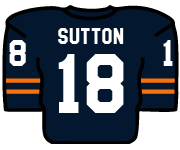
WR Max Sutton - Quincy, MA - Creator: Captain Mort 3D
College: New England
Drafted: 1957 - ON Round 2, Pick 17
Teams: Ontario/London Tigers (1957-1968)
McCallister Cups: 2 (1960, 1963)
Awards: Most Valuable Player (1960), Offensive Player of the Year (1961), McCallister Cup MVP (1960)
All-Stars: 6 (1959-1961, 1963-1965)
Player of the Week: 3

Max Sutton retires as one of the best wide receivers in the NAAF’s history. After being drafted in 1957, he took a couple of seasons to find his rhythm in the Tigers’ offence, but he quickly developed amazing chemistry with QB Riley Kiernan. By his 3rd season, he earned his first All-Star nod and would go on to be an All-Star in 5 of the next 6 seasons after that. In 1960, Sutton had his biggest season, where he became just the second WR to win the MVP catching a league-leading 12 touchdowns and having the most receiving yards. In that same season, Sutton also won the McCallister Cup MVP during the Tigers’ first championship run. Sutton continued to be a strong WR, winning Offensive Player of the Year the next season. In the past 3 seasons, Sutton’s play had dwindled, but he remained a strong leader in the Tigers’ locker room. He still was able to catch one last touchdown this season despite coming off of the bench. Sutton is unsure what he will do in retirement but expects to be involved in football at some level.

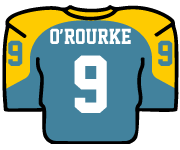
QB Connor O’Rourke - Weymouth, MA - Creator: Darknes
College: Cambridge of Boston
Drafted: 1953 - PRO Round 1, Pick 5
Teams: R.Providence Gold Stars (1953), Providence Gold Stars (1954-1968)
Captaincy: PRO - A (1957-1959), PRO - C (1958-1968)
McCallister Cups: 0
Awards: Most Valuable Player (1957), Playoff MVP (1964), Breakout Player of the Week (1955)
All-Stars: 2 (1957, 1963)
Player of the Week: 17

Connor O’Rourke could be argued to be one of the best QBs to never win the McCallister Cup in his career. His career got off to a shocking start with the Gold Stars who surprised everyone by taking the QB with their 5th overall selection in 1953. After sitting behind QB Bruce Woodard for a pair of seasons, O’Rourke was handed the reins. The young QB made a great first impression, winning the Breakout Player of the Year award in 1955. Just two seasons later, O’Rourke would have an MVP season, leading the Gold Stars to 9-3 and first in the East Division. Unfortunately, the team would be knocked out by the Royals in the East Division Final. O’Rourke was able to get his first playoff win the next season, beating the Independents 21-6, but fell to the Royals again in the East Final. In 1960 and 1961, O’Rourke suffered injuries that would certainly hurt the longevity of his career. Not to mention, the team hit rock bottom with a 1-11 season in 1960. However, O’Rourke would recover and with a stronger defence would make 3 straight playoff appearances. While the first two seasons ended in losses in their first game, the 1963 season would see O’Rourke reach his first and only McCallister Cup where the Gold Stars would fall just 4-points short of the Cup, losing to the Tigers 34-31. Following the cup appearance, O’Rourke’s play would decline as the team got older and they would miss the playoffs in 3 consecutive seasons. However, in 1967, O’Rourke would make one last push, getting the Gold Stars back to the East Division Final, but they were still unsuccessful. This past season, O’Rourke was clearly not the same QB he used to be and his body was getting harder to manage, so O’Rourke has decided to call it a career. Though he is expected to still be involved with football down the line.

WR Derek Cross - South Bend, IN - Creator: Darknes
College: Michigan U
Drafted: 1957 - MTL Round 1, Pick 5
Teams: Montreal Rouge (1957-1967), Long Island Raiders (1968)
McCallister Cup: 0
All-Stars: 3 (1960, 1961, 1964)
Player of the Week: 3

Cross was one of the most electrifying deep threats in the NAAF during his career. Cross broke into the league as a first-round pick in 1957, however, he truly broke out in the 1960 season. Topping his previous career-best 4 touchdowns, with a 10-touchdown season. Cross’ career took off, even more, when the Rouge acquired QB Gene Bishop, whose arm was perfect for hitting the speedy Cross down the field. With Bishop as his QB, Cross would help the Rouge to make a pair of McCallister Cup appearances in 1962 and 1966. However, they never were able to win the big one. Cross saw his targets and role dwindle in the Rouge offence over his last couple of seasons with the team, mostly due to the great play of WR Taylor Karis and his reducing speed. The lower reps led him to change teams to the Raiders for his final season. Cross didn’t see much time with the Raiders, so he ultimately knew his career was done and stepped away from football.

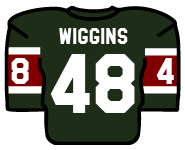
LB Deon Wiggins - Hempstead, NY - Creator: Captain Mort 3D
College: Long Island State
Drafted: 1958 - LI Round 4, Pick 37
Teams: R.Long Island Raiders (1958-1959), Long Island Raiders (1960-1968)
McCallister Cups: 1 (1965)
All-Stars: 2 (1963, 1964)
Player of the Week: 1

Wiggins is the pure definition of a hometown hero. He grew up on Long Island, went to Long Island State, and then was drafted by the Long Island Raiders. Wiggins would take a couple of years to develop, but he would become an important member of the Raiders’ defence over 9 seasons with the team from ‘60-’68. Wiggins was never the star of the defence, but he did have a couple of All-Star seasons in ‘63 and ‘64, which cemented him as one of the better LBs to play during his time. While he did just miss out on the Raiders' first run to the Cup in 1958, Wiggins was able to help the team win their 2nd title in the 1965 season. Wiggins retires after some injury-riddled seasons which was signalling the end of his playing days. 

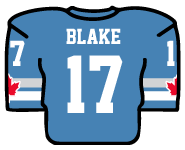
DB Orville Blake - Toronto, ON - Creator: Wallflower
College: St. George
Drafted: 1957 - OFU - Toronto
Teams: Toronto Steelheads (1964-1968)
Captaincy: TOR - A (1967-1968)
McCallister Cups: 0
All-Stars: 2 (1965, 1965)

Orville’s time in the NAAF was very short, but he was one of the most under-the-radar players in the league. He was not a huge game changer like Oliver Langstrom or Neville Falkner, but he still was a sturdy DB for the Steelheads over their first 5 seasons. He would get some recognition for his play in the ‘65 and ‘66 seasons being named to the West Division All-Stars. Blake was never able to win the McCallister Cup, but he did win plenty while playing in the OFU prior to the merger. Blake is likely to continue to work with the NAAF, potentially being a future part of the league’s administration. 

LB Douglas MacDougall - Saint John, NB - Creator: Darknes
College: Nova Scotia
Drafted: 1958 - OTT Round 1, Pick 9
Teams: Ottawa Royals (1958-1966), Halifax Mariners (1966-1968)
McCallister Cups: 2 (1959, 1968)
All-Stars: 1 (1964)
Player of the Week: 1

MacDougall came out of the U of Nova Scotia as one of the best talents coming from the area at the time. After the Royals took him with the 9th overall pick in the draft, MacDougall would get right to work. He helped the team get their 4th Cup in 1959, which would be the first of two that MacDougall achieved in his career. The hard-working player would continue to work his way up to the top of the Royals’ LB core and be a staple in that position for many seasons. During that time, MacDougall had his lone All-Star season in 1964. As the Royals continued to go through their rebuild, MacDougall would end up on the trading block and would be sent to the Halifax Mariners to return to the Maritimes. After the ‘66 season, MacDougall would stay with the Mariners, although taking on a smaller role, and would help bring the Cup to Halifax in what would be his final season. 

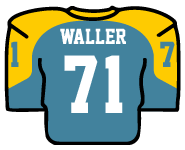
OL Nicholas Waller - Dover, DE - Creator: Dan O’Mac
College: The Colonial College
Drafted: 1958 - PRO Round 2, Pick 18
Teams: Providence Gold Stars (1958-1968)
McCallister Cups: 0
All-Stars: 1 (1962)

Waller was always a player that flew under the radar. His introverted personality caused a lot of people to overlook him throughout his career. He may have also been underestimated in the 1958 draft where he went 18th overall. Waller, again quietly, became a staple on the Gold Stars’ O-line throughout his career. Unfortunately, he didn't get a lot of eyes turning his way since the Gold Stars have never really had an O-line that was above the league average in terms of skill. Despite that, he did have an All-Star season in 1962 as some became more aware that he was playing really well on the weaker O-line. He continued to play well up until this past season where he dealt with a major injury that likely led to the decision to retire. Unfortunately, spending his whole career in Providence means he was unable to get a hand on the cup.  

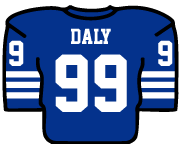
DL Mickey Daly - Buffalo, NY - Creator: GoRedSox96
College: Western New York
Drafted: 1957 - BUF Round 1, Pick 6
Teams: Buffalo Blue Wings (1957-1965), Pittsburgh Blacksmiths (1966-1968)
McCallister Cups: 2 (1957, 1964)
Player of the Week: 1

For a 6th overall pick, Daly’s career might be a bit of a disappointment. Not only was he a high pick, but also picked by his hometown team. Sure he was a completely serviceable starter throughout his career, being a strong piece to the Blue Wings’ D-line through his first 8 seasons, and helping them to a championship in 1964 (he also won in ‘57 as a rookie). However, he never was a true star that you would expect from a 6th overall pick. After 8 years in Buffalo, Daly would leave his hometown to play with the Blacksmiths over his final 3 seasons, where he was strong in his first season, but took massive steps in decline over the last two years.

Other Notable Retirements
QB Oscar Rigano - Bronx, NY - College: Rhode Island State - Creator: ZO82 - Drafted: 1956 MTL - R2: P9
Teams: R.MTL (1956), MTL (1957-1959), OTT (1960-1961), LI (1962), BOS (1963-1968)
S Neil Graham - Huntington, WV - College: Central Ohio - Creator: Captain Mort 3D - Drafted: 1957 ON - R2: P18
Teams: ON/LDN (1957-1968)**
LB Sam Wynn - Pawtucket, RI - College: Rhode Island State - Creator: Rugrat - Drafted: 1958 - BUF R1: P10
Teams: BUF (1958-1964)*, PIT (1965-1966), LI (1967), LOU (1967-1968)
DL Martin Garfield - Kitchener, ON - College: Kitchener-Waterloo Provincial - Creator: DireBear - Drafted: 1958 - LI R2: P17
Teams: LI (1958-1962)*, HFX (1963-1966), LDN (1967-1968)
LB Sebastian Andrews III - Montreal, QC - College: Montreal Provincial - Creator: Sevsdast - Drafted: 1958 - MTL R2: P19
Teams: MTL (1958-1964), PRO (1964), TOR (1965-1968)
OL Stanley Witt - Boston, MA - College: New England - Creator: Captain Mort 3D - Drafted: 1958 LDN - R2: P13
Teams: R.LDN (1958), LDN (1959-1960)*, BUF (1961-1964)*, BOS (1965-1968)
OL Byron Foster - Lexington, KY - College: Daniel Boone - Creator: Rugrat - Drafted: 1958 - LOU R3: P30
Teams: R.LOU (1958), LOU (1959-1966)*, PRO (1967-1968)
DL Theo Conte - Oyster Bay, NY - College: Brooklyn Metropolitan - Creator: Darknes - Drafted: 1958 - LOU R3: P21
Teams: R.LOU (1958), LOU (1959-1964)*, PIT (1965), IND (1966-1967), HFX (1967), MTL (1968)

Sunday, 7 August 2022

1969 Branding

1969 Branding


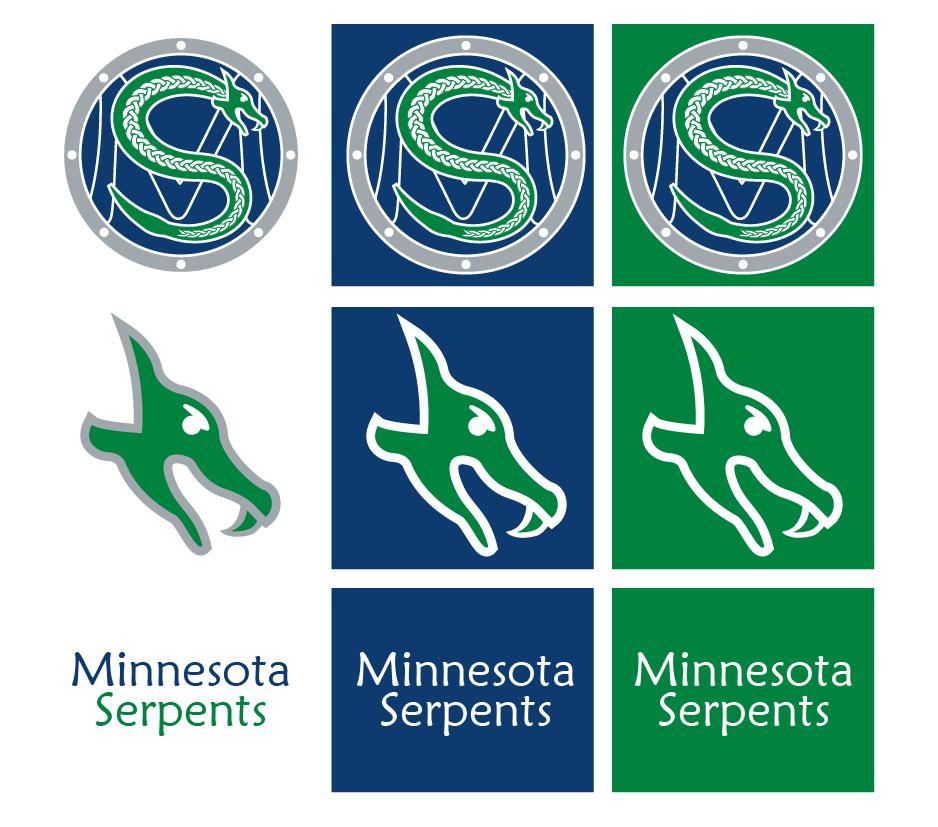
Introducing the…MINNESOTA SERPENTS
Kris Matheson was grinning ear-to-ear during the press conference to reveal the branding of his team. He first announced that the team would be named after the state prior to the conference by calling it the “Minnesota NAAF Reveal Press Conference”. Matheson first touched on the decision to go with a state name, stating that the decision was 1: to differentiate itself from the other Minneapolis team in the Minneapolis Black Bears, but 2: to represent both of the twin cities and the state as a whole. 

Matheson carried on with the reveal of the mascot. The Serpents. When Matheson was growing up, his grandpa, who was originally from Norway, told him about the Old Norse stories and mythology. Matheson was enamoured by the stories and, of course, was a big fan of Thor. When deciding on the team name, he wanted to pull from those old stories. He did wish that he could have called the team the Thunder after Thor, but of course, that was already taken. He had some other choices like Giants (Jötunn) or Ravens (like Odin’s Ravens), but he ultimately settled on one of the most feared beings in the mythos, the Serpent, specifically Jörmungandr (or the Midgard Serpent). Matheson loved the mascot, it was fierce and cool, as well as still having a connection to Thor, as the Norse God is prophesied to face Jörmungandr during the Norse Apocalypse, Ragnarök. 

Next, Matheson revealed the team’s logos. Here the team continues the Norse theme, taking inspiration from Norse artwork. The primary logo is a Viking shield with a stylized “M” placed on it in Blue, then a depiction of Jörmungandr is painted in green and white over top, making up the shape of an “S”. The serpent also features a classic Norse braid design that is featured in their artwork. The team also has an alternate logo featuring just the head of Jörmungandr. Silver is added to the scheme as the metal on the outside of the shield. 

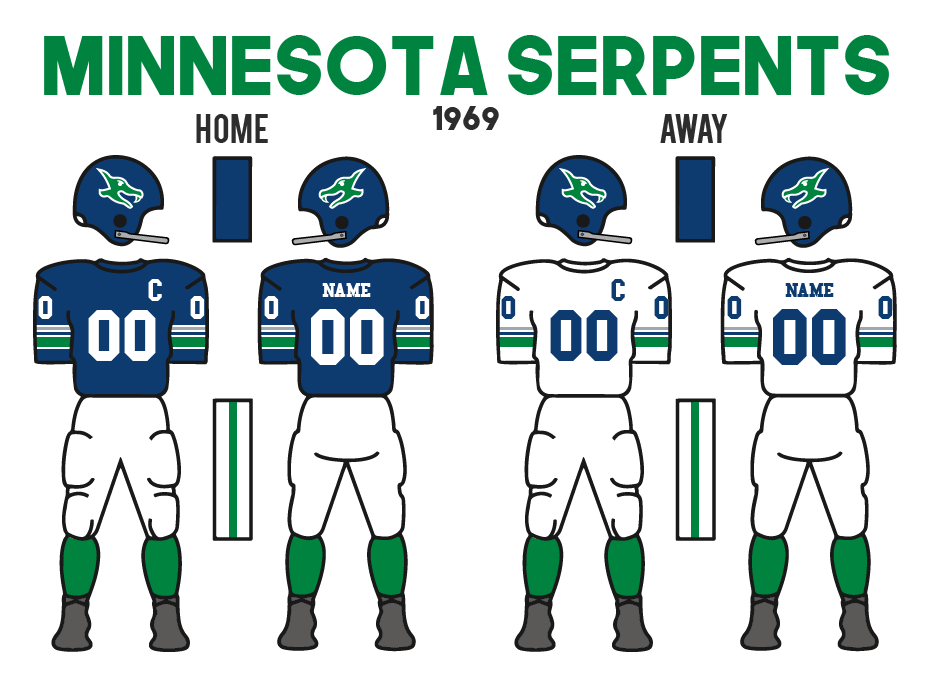
The logo was quite well received, however, the jerseys left a lot to be desired. The home uniform would be blue with a unique set of stripes. With 4 white stripes encompassing a stripe of each of the team’s colours. However, the Green stripe is the thickest of the stripes. Matheson pointed out that he wanted the striping to be completely different than any other team before. He accomplished it, however with criticism, especially about the fact that silver is only used in that one single stripe on the uniform. The pants would be white with a green stripe, and the socks simply all green. The road is pretty much the same as the home with just the blue base and white numbers colour swapped. The helmet was probably the best element, as the secondary Jörmungandr logo is used. 
Regardless of what others thought, Matheson was still very happy to have his team be brought to life.

On top of the branding reveal, Matheson also revealed the name of the team’s new stadium. While the original name idea had been simply Minnesota Football Stadium, Matheson came through with a better name of Midgard Stadium. Once again, he kept going with the Norse theme, as Midgard is the name of Earth within Norse Mythology. It also connects to serpents with Jörmungandr being the Midgard Serpent who is wrapped around the planet. Midgard Stadium will be about average size for NAAF stadiums, housing 50,230 seats. 

LONG ISLAND RAIDERS CELEBRATE 50 YEARS
The original Long Island Raiders were founded in 1919, as members of the NYCFL. 50 years later, that original team did not exist anymore. After the 1951 NYFL season (the league was renamed in the 1940s), the Raiders were folded as a part of the NYFL’s merger with the ACFL. In 1954, Long Island saw the return of football in the form of the relocated Hartford Hawks. After one season as the Long Island Hawks, the Raiders would return with Owner Wayne Tillman changing the name after just one season. Since then, the team has become a successful team in the NAAF with 2 McCallister Cup titles. 

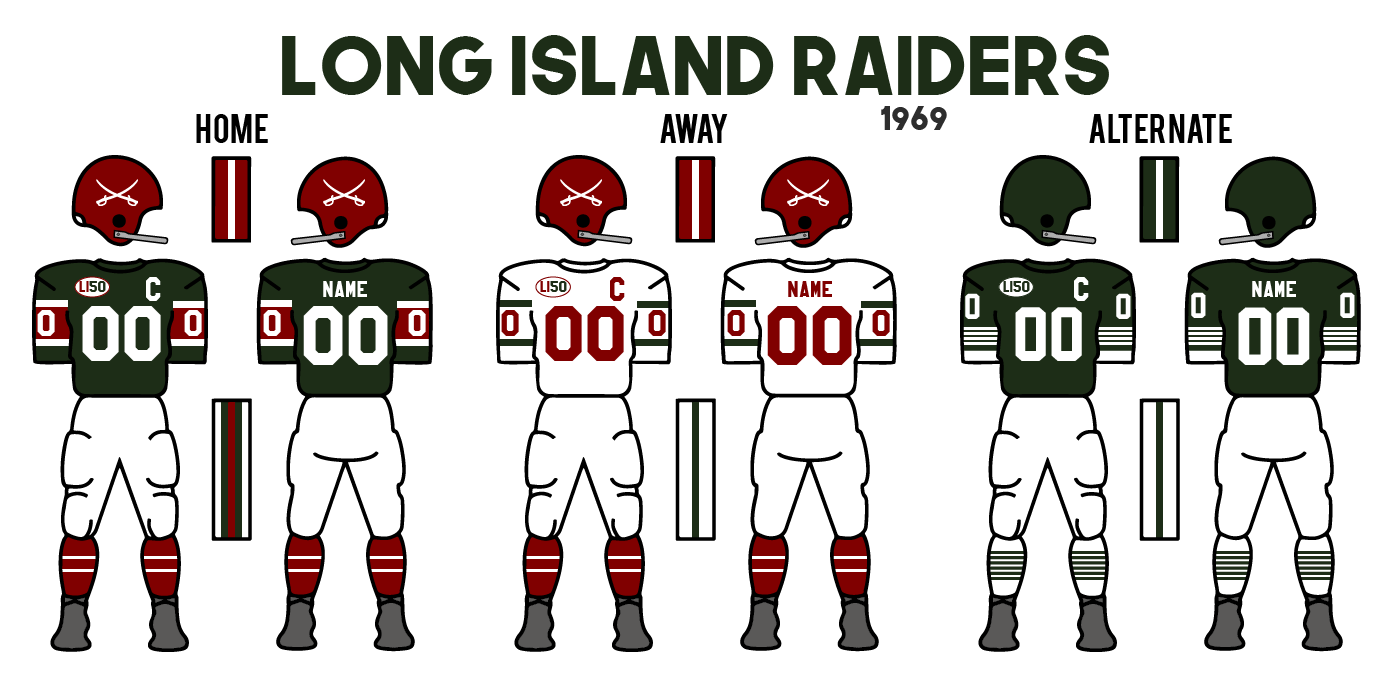
This season, to mark the 50-year anniversary of the team’s founding, the Raiders made some changes to their uniforms. The first is simply the addition of a “LI50” patch on the front of their jerseys, following in the footsteps of several other teams that have celebrated their history. 

However, the Raiders took it a step further and became just the second team to add a 3rd/Alternate jersey to their mix. While Tillman was a little worried that he may not be able to add the design after Toronto dropped their Hamilton Steelers alts last season, there were no issues from the league and they moved forward with the alternate option. This uniform is a throwback to the Raiders’ look from the 1951 season. The jersey is the team’s usual shade of dark green, which had only become the team’s colour after an attempt at black had ended up discoloured back when they first began to play in 1919. The uniform as a whole is as close as they could get to recreating the 50s jerseys while still following the jersey guidelines in the NAAF. Also to note, Maroon is completely removed as that was only added to the colour scheme following the team’s rebrand from the Long Island Hawks in 1955. 

With the addition of a 3rd jersey, which featured a new helmet, jersey, pants, and socks, the team decided to get rid of their secondary green pants and white socks from the white jersey and replace them with the maroon socks from the home jersey and the white pants from the alternate. 

Saturday, 6 August 2022

1969 League Meetings

1969 League Meetings

THE KANSAS CITY ISSUE
Conversations about how to manage the developing situation in Kansas City were at the forefront of the league meetings. However, before the conversations got into full swing, the league confirmed that the Minneapolis team would be joining the NAAF on schedule for the 1969 season. Kris Matheson was very much relieved to know he would finally get to see his team take the field.

The first of the solutions was to see if there were other suitable stadiums available for the Kansas City team to play in until the stadium is finished. The first option was to play at the University of Kansas City, which had a smaller venue. The issue with this solution was the stadium was not built to house the slightly larger field size with pavement and fencing at the back of the endzone, which was deemed unsafe by the players. If they wanted to use the field, they would need to perform renovations which wouldn’t be a lot, however, the University wished to have a full-on renovation if they were going to do any changes, which would be costly and there was no interest to continue to throw more funds into a different stadium. 

The second option was to turn to Omaha, Nebraska, the other strong option for expansion that KC had beat out. The city had the option to play at Major Nebraska University’s football field, however, the state and university had also taken a hit due to the drought as well. On top of that, Jacob Cross was going to need some help keeping the team afloat and the ownership group behind the Omaha bid did not want to invest in a team that would not ultimately be theirs. 

The next option that was looked at was another bid in the Northeast to house the team for a couple of seasons. Not only giving a city that has been passed over multiple times a chance but could keep the current divisions intact. They looked at Quebec City, Portland, and Hartford, but once again there was not a lot of movement on that front. Some of the cities wanted a full-time team and not just be a stop-gap for another team, similar to the Omaha situation. Also, Mr. Cross didn’t want to own a team so far from his home in Kansas City.

Further options were discussed, but very briefly. None of the options seemed reasonable, so the league went ahead with a new decision. The Kansas City team would be postponed for the time being. If everything goes forward under a new ideal plan for the stadium’s completion it should be finished in time for the 1971 season, however, this is best case scenario and much of the funding is going to have to hope for a strong comeback crop next summer. Commissioner Ryan Jameson is expected to explore other options as well over the next season just in case the stadium’s production remains in limbo over the next year.

As for the 1969 season, Minneapolis will join the West Division for the upcoming season. However, Toronto will not have to make the shift to the East Division due to KC not joining the league. A 12-game schedule is expected, however, instead of the mid-season bye weeks, each team will get a bye week throughout the season as one team will be off each week. The actual makeup of a team’s schedule is yet to be determined, but ideas of a pure round robin or an all-divisional schedule have been tossed around along with a more balanced option. More news on the 1969 season will occur later.

MINNEAPOLIS EXPANSION DRAFT
With only one team taking part in the 1969 expansion draft, the NAAF has elected to follow the same expansion draft protection rules as the 1965 Blacksmiths’ expansion draft. Each of the established 12 teams will be able to protect 12 players of any age, with an additional 4 slots that can go to players that are 24 and under. After that the Minneapolis team will select 3 players from each team to make up their first roster. The expansion draft will occur prior to free agency in the early months of 1969.

HYBRID FOOTBALL COLLEGE
CANADIAN CONFERENCE CHANGES
After the shutdown of the OFU and the rise of the Canada East Hybrid Conference, there were several colleges that shut down their football programs, not desiring to continue with hybrid football. However, a couple of those schools have been desiring a return to football athletics. Conversely, the NAAF is open to continuing to grow the game and adding more schools to their hybrid conferences. In order to make some new moves, the league is moving some funds to help new programs get off the ground at these schools. There are expected to be a lot more changes down the line, but for this season, the CEHC will see 2 new schools join them for 1969.

Dominion University of Canada
Location: Kingston, ON
Abbreviation: DOM (some also call it the DUC, but the university prefers DOM)
Common Name: Dominion
Mascot: Knights
Rival: St. George
Notable Players: Edmund Landry, Gregory Ferrell, Hector Greenville

Dominion is the oldest school in Canada. Originally built just after the time the Dominion of Canada was formed in 1867. It’s a prestigious school with lots of history. It falls under the same category as St. George in Toronto and Cambridge of Boston in Boston, as a school that puts academics first. However, they have always been a surprisingly strong school in sports sharing rivalries with St. George, Toronto, and Rideau. 

Sudbury Provincial University
Location: Sudbury, ON
Abbreviation: SPU
Common Name: Sudbury Prov
Mascot: Miners
Rival: Kitchener-Waterloo Provincial
Notable Players: None

Sudbury Provincial is relatively new to football, but the NAAF is hoping their place further North will be able to bring in talent from other parts of the province. Sudbury had fielded some football teams in the past but had shut down several years before the OFU folded. Sudbury Prov is not expected to be all that competitive, but its goal is mainly to help grow the game and bring talent in from the Northern Ontario communities. 

POTENTIAL FOR FURTHER EXPANSION OF AEHC
In the US, it is certainly much harder to expand the influence of the game, especially with the strong-knit rivalries and traditions that many schools have, however, there are a few schools that seem to be interested in making a switch over to the hybrid game. The interest is coming from schools with NAAF teams nearby. The biggest chunk of schools are in Indiana and Kentucky. Louisville State and Northern Indiana (Fort Wayne, IN) both have become NAAF hotbeds as many prospects are choosing to make the transition to hybrid due to the Victors and Thunder. If those schools make the transition, it is expected that state rivals, Daniel Boone (Lexington, KY) and Indiana Tech (Indianapolis, IN) will join them. Allegheny University in Pittsburgh is also tossing around the idea due to the shift of the fan base from the Hammers to the Blacksmiths, however, that transition may still be a long shot for now. 

If the new schools are added, there could be a conference split where a few of the Western teams in the AEHC join the new schools to form a new conference as well. No changes will come to the AEHC this season, but be on the lookout over the next couple of years. 

ACFL
CHANGING COURSE

Last offseason, the ACFL saw a major change with Stephen Van Fossen being removed as commissioner of the league. Don Soriano, the owner of the Philadelphia Rebels, took his place and after 1 season at the helm, it was time to make some changes. The first changes were to pretty much undo the moves that Van Fossen had. Van Fossen’s biggest failure had been the expansion into Boston. The Shamrocks were a desperate attempt at trying to pull the Boston market back into American football, however, no one cared about the Shamrocks. Not only was the team bad, but fans preferred to just go to the Independents’ games instead and not spend more money on the Shamrocks. The Shamrocks barely ever broke 10,000 fans for any of their games in the 45,265-seat Richardson Stadium. Now, the Shamrocks had been improving on the field over the years, but in the stands, nothing changed. Soriano decided to merge the Shamrocks’ roster with the Pittsburgh Hammers, officially ending the ACFL’s venture into the city. As for the Hammers, they are hoping a better overall roster can help fight to keep the Hammers’ fans engaged with the city’s older team. Unfortunately, they are fighting an uphill battle, especially after the Blacksmiths showed that they can tango with the best of the NAAF and are certainly pulling in the disgruntled Hammers’ fans. 

The other move was with the Rochester Millers. While the team overall had not been as big of a failure as the Shamrocks. The owners did not see a strong market in Rochester and felt that the team would begin to fall behind in the near future, especially with the old stadium in the city. Soriano and the ACFL would buy out the ownership and fold the team, sending its players to the other ACFL teams. 

The ACFL and Soriano are hoping the moves can bring more focus to the central teams of the ACFL and regain some stability before they move forward with a new plan under Soriano.

Thursday, 4 August 2022

BREAKING NEWS - EXTREME DROUGHT PUTS KANSAS CITY NAAF TEAM IN JEOPARDY

BREAKING NEWS - EXTREME DROUGHT PUTS KANSAS CITY NAAF TEAM IN JEOPARDY

During the summer of 1968, many parts of the central United States suffered an extreme summer drought. The heat and lack of rain hit the agriculture industry hard and left many businesses and farmers in tough spots. The most notable of the businesses affected was Powell Mills which was the primary financial backing to the Kansas City NAAF ownership group. Powell Mills had been the primary source of funding along with the city to help build the new stadium for the NAAF team, however, due to the drought, Powell Mills and the city had to pull funding, in mid-August. While there was an expected delay on the stadium’s completion, no one was expecting it to have completely stopped altogether since funding was pulled. The lead owner, Jacob Cross, had already spent a lot of his own wealth to help move the construction along during July and early August and was himself at a point of spending too much and the NAAF had already poured a lot of funds into Minneapolis’ new stadium. 

At this point, the stadium is only about 50% finished and will not be ready for a new team to play in next season even if funding is picked up again relatively soon. The NAAF is set to have its annual league meetings in the coming weeks and Kansas City will surely be the focus.

Monday, 1 August 2022

1968 Award Winners

1968 Award Winners

Most Valuable Player - RB Max Tracy TOR
Tracy would easily win the league’s MVP award earning 75% of the vote. His dominance on the ground this season, carried the Steelheads to their second division title this season. Unfortunately, Tracy was unable to use his legs come playoffs, due to a late-season injury, but this season was one of the best. Tracy joins Jimmy Golden and Élisée Marchal as running backs who have won MVP awards.

Playoff MVP - DL Wayne Baxton HFX
The playoff MVP award was a difficult one to pick, as there were many players that performed well throughout the postseason, from DB Joe Robinson to QB Lyle Painter, or even DB Cameron Taylor or WR Shane Steadman, but in the end, Wayne Baxton continued to make a huge impact on the line. Causing a few turnovers and leading the playoffs in sacks. His play on the field often seemed to fuel the Mariners’ defence to continue to play at the elite level they had in all 3 of their games.

Offensive Player of the Year - QB Nathaniel Braddock BOS
Nathaniel Braddock takes home his second OPOY this season, winning with an 83% majority (with the votes for Tracy going to him). Braddock continues to show that he is one of the best in the game despite Boston’s shortcomings. His 25 passing touchdowns was a career-high this season. Braddock has still somewhat left a lot to be desired in his career despite his generational label coming out of the draft in 1958, but his second OPOY will certainly help his legacy.

Defensive Player of the Year - DL Bernhard Hartmann OTT
Hartmann takes home the DPOY for the first time in his young career and joins DB Neville Falkner as the only players to win the DPOY award in their second season in the league. The vote, however, was very close as Hartmann only had a 33% of the vote, only winning by a single vote. Hartmann has already become a staple in the Royals' defence and is likely to become the centrepiece for the future.

Special Teams Player of the Year - K Henderson Schumacher LI
For the second year in a row, Schumacher is the STPOY. Schumacher scored 111 points, leading the league in kicking points this season. This is the second time Schumacher has won the award in back-to-back seasons, doing the same back in 1958-1959. Schumacher joins Nimrod Handsworth and Thomas McFadden as the only 3 to have at least 4 STPOY awards. 

Rookie of the Year - DL Arthur Bradshaw PIT
Bradshaw took home the Rookie of the Year award beating out DB Lamar Brown with 58% of the vote. Bradshaw proved he was the best prospect coming out of the draft after the Steelheads passed on him at the #1 pick. Bradshaw already looks to be a deadly force of the D-line and should continue to be a defensive superstar for the future of the Blacksmiths. 

Coach of the Year - HC Jean Matieau OTT
Matieau’s legacy continues to grow as he takes home a Coach of the Year. Matieau took home 83% of the vote after leading the Royals to their best record since 1959. The former 3x MVP has clearly taken the team to the next level, most notably helping build the league’s best defence this season, something many would not have pinned the former QB to do. Matieau has impressed in his first season at the helm and brings a promising future to the Royals organization.

Breakout Player of the Year - QB Louis Vaughn PIT
Vaughn becomes the 8th QB to take home the Breakout Player of the Year Award. He cleaned up in the voting taking home 92% of the vote. Vaughn helped the Blacksmiths to a strong 6-6 season, while his second half of the season was not as sharp as the first half, Vaughn showed his abilities to bring a bright future to the city of Pittsburgh.


1968 All-Stars

WEST ALL-STARS
QB Charles Lemieux BUF (3)
RB Max Tracy TOR (2) 
OL Erik Nelson PIT (2)
OL Taylor Forbes LOU (5)
OL Viktor Stahl IND (4)
OL Jean-Baptiste Desjardins IND (5)
OL Emil Jennings LDN (4)
WR Ed Edwards IND (7)
WR Taylor Austin PIT (1)
WR Casey Coleman LOU (1)
TE Tranquille Rousseau LDN (2)

DL William Sanderson BUF (12)
DL Bjorn Sigmarsson LOU (6)
DL Richard Blunt LDN/TOR (3)
DL Arthur Bradshaw PIT (1)
LB Dallas Dillard LDN (6)
LB Orion Carter (2)
LB Marshall Langenbrunner IND (3)
DB Ezra Power BUF (3)
DB Cameron Taylor IND (3)
DB Bernard Wilkins LDN (1)
S Charles Clerk TOR (1)

K Ross Poindexter IND (2)

EAST ALL-STARS
QB Nathaniel Braddock BOS (3)
RB Dareion Fields LI (8)
OL Reynold Gilbertson BOS (2)
OL Gary Bies LI (1)
OL Joseph Samberg PRO (2)
OL Mathieu Roy MTL (1)
OL Millard Streety HFX (1)
WR Zachariah Pembroke BOS ()
WR Taylor Karis MTL (5)
WR Shane Steadman HFX ()
TE Tobias Lindholm BOS (2)

DL Bernhard Hartmann OTT (1)
DL Wayne Baxton HFX (6)
DL Pat Butler HFX (3)
DL Lucas Kipling MTL (3)
LB William Washington II LI (4)
LB Byron Turner BOS (1)
LB Victor Falkensteig PRO (2)
DB Neville Falkner PRO (8)
DB Rutherford Winters LI (2)
DB Sergio Alvarez OTT (2)
S Marc Bellecourt OTT (1)

K Henderson Schumacher (6)

1968 League Leaders

Passing Touchdowns
1 - QB Nathaniel Braddock BOS - 25
2 - QB Louis Vaughn PIT - 22
T3 - QB Charles Lemieux BUF - 21
T3 - QB Lyle Painter HFX - 21
5 - QB Buck Murphy LOU - 20

Rushing Touchdowns
1 - RB Max Tracy TOR - 22
2 - RB Jimmy Golden BUF - 18
3 - RB Dareion Fields LI - 16
4 - RB Raymond Green IND - 12
5 - RB Corbyn Knight OTT - 11

Receiving Touchdowns
1 - WR Zachariah Pembroke BOS - 13
2 - WR Ed Edwards IND - 12
3 - WR Taylor Austin PIT - 11
T4 - WR Shane Steadman HFX - 8
T4 - WR Cole Fletcher LDN - 8
T4 - WR Casey Coleman LOU - 8

Interceptions
1 - DB Neville Falkner PRO - 8
2 - DB Ezra Power BUF - 7
3 - DB Rutherford Winters LI - 6
4 - DB Sergio Alvarez OTT - 6
T5 - DB Oliver Langstrom BOS - 5
T5 - DB Joe Robinson HFX - 5
T5 - DB Bernard Wilkins LDN - 5
T5 - S Garet deVale MTL - 5

Forced Fumbles
1 - DL Wayne Baxton HFX - 6
T2 - LB Byron Turner BOS - 4
T2 - LB Marshall Langenbrunner IND - 4
T2 - LB Dallas Dillard LDN - 4
T2 - LB William Washington II LI - 4
T2 - DL Craig White PRO - 4
T2 - DL Richard Blunt TOR/LDN - 4

Field Goals
1 - K Henderson Schumacher LI - 27
2 - K Albert Wickerweaver HFX - 26
T3 - K Ross Poindexter IND - 23
T3 - K Ira Foster OTT - 23
5 - K Al Highlander PIT -22 

Kicking Points
1 - K Henderson Schumacher LI - 111
2 - K Albert Wickerweaver HFX - 107
3 - K Ira Foster OTT - 102
T4 - K Ryan Perch BUF - 99
T4 - K Al Highlander PIT - 99

NEW FORMAT FOR McCALLISTER CUP HOST SELECTION
Starting with this season, the NAAF has decided to change its selection process for cities. They have split the potential host cities into regions which will be rotated through year-to-year to help bring a generally local championship game to each region every 3rd year. The regions will be the Midwest (Buffalo, Indianapolis, Louisville, Pittsburgh), Canada (Halifax, London, Montreal, Ottawa, Toronto), and New England (Boston, Hempstead, Providence). Cities like Halifax and London are not expected to be picked much if at all, due to the smaller markets and stadiums as the league wants to continue to play their championship games at larger venues. Pittsburgh is also another that may not see a game played due to potential conflicts with the Pittsburgh Hammers (it is easy to assume the ACFL may try to schedule a game the day of or before the McCallister Cup). The rotation will begin this season with the Midwest, however, the decision does follow the pattern with the Canada region hosting in 1967 (Ottawa) and the New England region in 1968 (Boston).

51st McCallister Cup Host - Victory Stadium - Indianapolis, IN - Capacity: 48,500

Victory Stadium had been long talked about getting a second crack at the McCallister Cup game, and just over a decade later, the city will host the championship game. Victory Stadium’s circular and large makeup makes it a strong visual representation of the big stage. Victors’ owner, Sammy Kirkdale was very excited about bringing the game back to Indiana, especially considering his team had just made their first appearance in the final.


Hearn is out as lead Ownership Candidate in Kansas City

In the past month, Cal Hearn had become the frontrunner for ownership of the Kansas City NAAF franchise. In the past week being made more of...